Cortisol, In Bar Language
Everyone online is selling a way to lower it. Here's what it actually is, why yours is supposed to spike at dawn, and the short list of things that really move it.
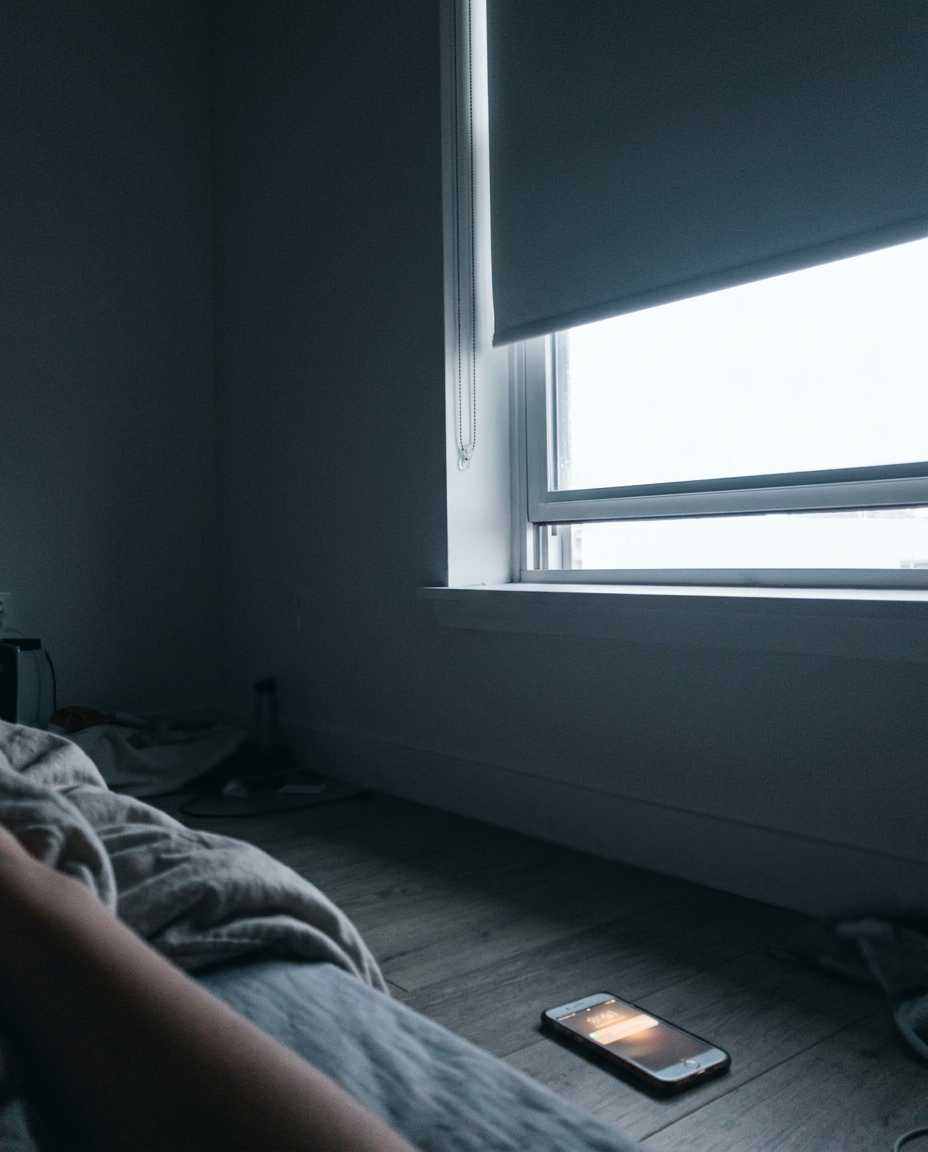
Six forty in the morning. Ten minutes before the alarm, and your heart is already going — before anything has happened, before you have had a single thought worth panicking about.
So you pick up the phone, type why do I wake up with anxiety, and the internet tells you your cortisol is high, your face is puffy because of it, and there is a protocol you can buy. I am not selling you a protocol. The thing happening at 6:40 is probably the least broken part of your morning.
What It Actually Is
Cortisol is the hormone that gets you up.
Not the villain of the story — closer to the switch that turns the lights on in a house before anyone is awake. It pushes sugar into your blood, nudges your blood pressure up, makes standing available as an option. People whose bodies stop making enough of it get seriously ill. It climbs again when something is genuinely demanding — an argument, a sprint, a deadline you have been avoiding. More demand, brighter lights.
Your Morning Spike Is Supposed To Happen
The thing at 6:40 has a name: the cortisol awakening response.
Pruessner and colleagues, 1997, in Life Sciences measured 152 people across three studies, children through to the elderly, spitting into tubes every ten or fifteen minutes from the moment they woke. Free cortisol rose 50 to 75 percent in the first thirty minutes — in both sexes, on every day they measured. The 2009 review by Fries, Dettenborn and Kirschbaum covers the years since, and the picture holds: the rise is the normal thing. Not a universal law — a fair number of healthy people skip it on any given morning — but the default setting of a working body.
Now the part that flips the panic. What researchers get uneasy about is usually not a big spike. It is a flat one — a low rise that never really arrives, which is the direction things lean in people reporting long-term fatigue.
The size of that one
Observational pattern, not a proven cause. Powell and colleagues, 2013 pooled the studies and found the smaller morning rise does show up in chronic fatigue — then said plainly that there was almost no long-term data, so nobody can say which came first. It is a flag researchers watch across groups, not a verdict on you, and there is no home version of it.
What It Does Not Mean
Three industries got built on this word.
Cortisol face is a social media term; your doctor cannot order a test for it. There is a real condition where cortisol stays high for a long time — Cushing's syndrome — but a rounder face is one item on a list that includes muscle weakness and skin changes, it is rare, and it is diagnosed with lab testing — blood, urine and timed saliva — not by looking.
Adrenal fatigue. In 2016, Cadegiani and Kater screened 3,470 papers and found 58 that actually tested the idea. They titled the result Adrenal fatigue does not exist: a systematic review. The Endocrine Society's patient page says no test detects it.
Cortisol detox. You cannot detox a chemical your body makes on purpose to keep you conscious.
This one can actually hurt you
The Endocrine Society's warning is not about wasted money: take adrenal hormone supplements you do not need and your own glands can stop working, then stay asleep for months after you quit. Meanwhile, being tired every day is real and has real causes. A label nobody can test is an efficient way of never getting looked at properly.
What Actually Moves It, And By How Much
- Morning light. Thorn and colleagues, 2004, in Psychoneuroendocrinology used a lamp brightening to about 250 lux over the half hour before the alarm, and the awakening response got bigger. Twelve people, four weekday mornings. A hint, not a law — but free.
- What time you get up changes the size of it — Federenko and colleagues, 2004. Shift nurses on a 4am start had the biggest rise; students waking from an evening nap had none at all. The clock matters more than the act of opening your eyes — though nobody has tested moving your alarm by twenty minutes.
- Exercise, and it goes up, which is fine. Hill and colleagues, 2008 had twelve men do thirty minutes at 40, 60 and 80 percent of their maximum oxygen uptake. Moderate raised cortisol about 40 percent, hard about 83; easy lowered it slightly. The useful part is not the number — it is that a workout raising your cortisol is the workout working.
Now the one I wanted to be true
Four years sober, and I would love to tell you last night's wine is why you woke up like that. The best paper I can point to does not say that.
Badrick and colleagues, 2008, in the Journal of Clinical Endocrinology and Metabolism measured 2,693 men and 977 women from the Whitehall II cohort. In the men, heavy drinkers' cortisol fell more slowly across the day; in the women, the awakening response was bigger. Two different findings in two different halves of the room — already a reason to hold it loosely. And it is a snapshot, not a follow-up, and the authors said the effect did not look like it came from what people drank on the day of testing — it looked like a years-long pattern. A real association, in a big group, that cannot tell you which way the arrow points and has nothing to say about one glass on a Tuesday.
That gap is the difference between a headline and a paper.
What You Cannot Do About It
You cannot read your cortisol off your face, your energy, your sleep, or how bad the week was. No symptom list gets you there.
You cannot easily measure it either, and neither can the professionals. The 2016 expert consensus guidelines from Stalder and colleagues exist largely because being a few minutes late with the first saliva sample changes the answer, and people cannot self-report their waking time accurately enough. If a lab with a stopwatch finds it this hard, the kit that gave you a number from four spits into a tube is not doing better.
And you cannot get it to zero. Zero is a hospital.
Not For
This is for a morning that starts too fast. It is not for a diagnosis, and I am not the person for that one.
If it is every single day, or it arrives with weight changes, muscle weakness, hair or skin changes, or tiredness that sleep does not fix — that is blood work with a doctor, not a blog post. Those conditions are real and they are findable.
If you are on something that works, keep taking it. Nothing here replaces it, and I would be the last person to tell you otherwise.
If tonight is worse than a bad night: in the US, call or text 988. It is free and it is not an overreaction.
One Thing, Tomorrow
Before the phone: open the blind and stand in front of it while you do something you were doing anyway — kettle, socks, teeth. Two minutes of real morning light before a screen.
That is twelve people and a lamp. It will not fix your week. But your body was already doing the loud part on its own at 6:40, and this is just standing where it can see.
More from Wilder Brain
Task Aversiveness, In Bar Language
The real predictor of procrastination has a clinical name and nothing to do with being lazy. Here is the number behind the word, and the one thing that actually moves it.
Longer Out Than In
The breathing thing, except the version that was actually tested — including the part where the people it beat were meditating, not doing nothing.
Nobody Claps For This Part
Eight weeks in, doing everything right, and nothing feels like anything. What two large trials actually measured about acting first and wanting it later.