Nobody Claps For This Part
Eight weeks in, doing everything right, and nothing feels like anything. What two large trials actually measured about acting first and wanting it later.
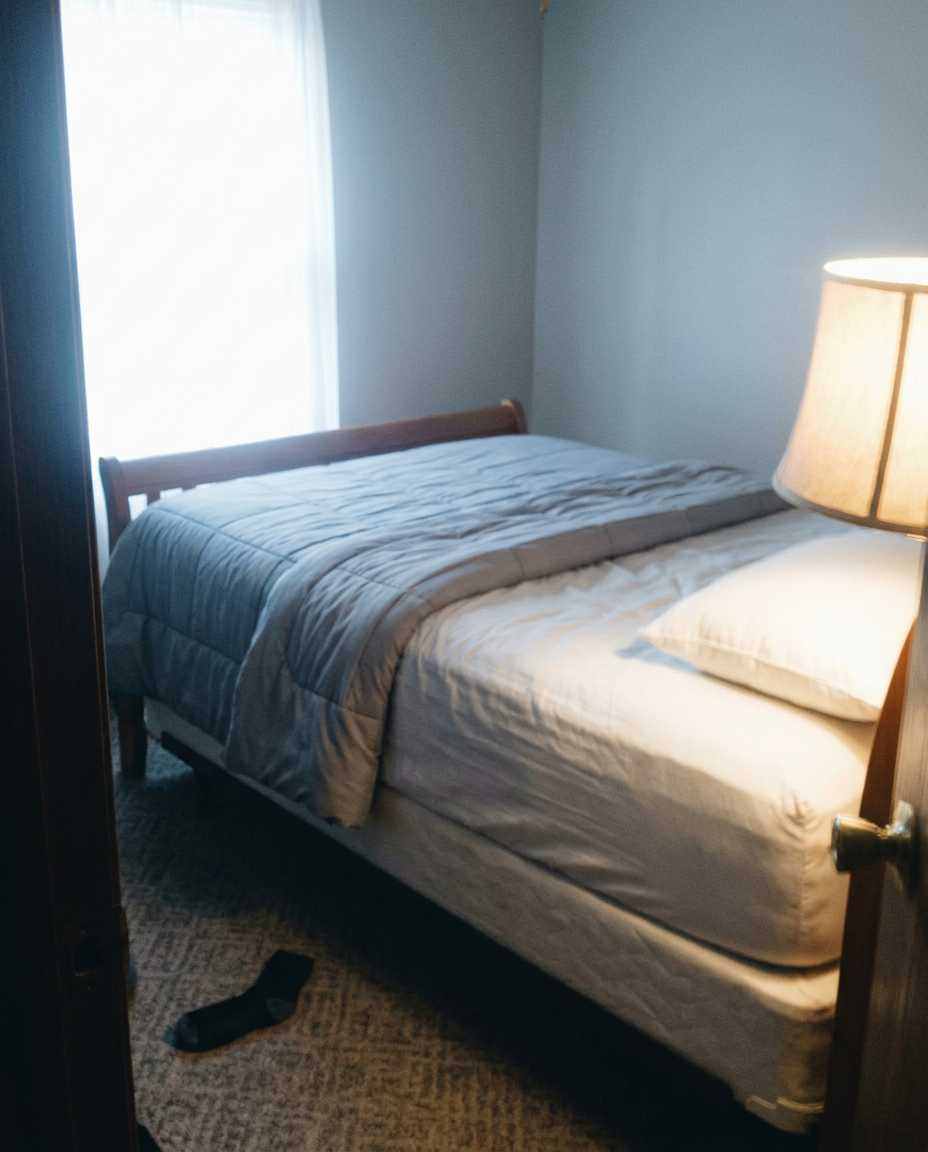
It is a Tuesday in week eight. You made the bed, you went at six, you had water at the bar on Friday, and somewhere in the afternoon it lands on you that nobody has said a word about any of it.
Nothing is wrong. That is the problem. The moment you have been waiting for has not arrived and is showing no signs of booking a flight.
It is not sadness. It is the specific flatness of doing everything right and getting no receipt for it.
What The Video Actually Said
Eighteen seconds, about forty words. Each line, with what did not fit behind it.
- "Eight weeks in." Week eight is when the scaffolding comes off. The first stretch runs on novelty and on people asking how it is going. Both expire, and nobody tells you the date.
- "Nobody noticed." They noticed the old version because it was loud. Wreckage is legible from across a room; maintenance is not. Nobody has ever thrown a party for a made bed. The absence of applause is not feedback on your work. It is information about what applause is for.
- "You're waiting for a moment." I waited about two years for mine, expecting to wake up different one morning and know it. Instead, at some point I noticed I had not thought about it in a while. That is not a moment. It is the absence of one, and you cannot feel an absence arrive.
- "The order is backwards." This is the line with paper behind it. Common sense says feel like it, then do it. There is a whole therapy built on running that backwards: you do the thing first, and the wanting comes back later. Sometimes much later.
- "Stay in the boring part." That is the entire instruction. I am aware of how that reads.

The moment you are waiting for is not late. It is just not shaped like a moment.
What The Video Didn't Have Room For
The trial behind "the order is backwards" is a trial of therapy, not of doing it alone. In the COBRA trial (Richards and colleagues, The Lancet, 2016), 440 adults were randomised. At twelve months the gap between behavioural activation and CBT on the PHQ-9 was 0.1 points, 95% confidence interval minus 1.3 to 1.5. I will not turn that into "so you do not need anyone." Those were up to twenty sessions over sixteen weeks, with a person, for people who met the diagnostic criteria for major depression in a clinical interview. What transfers to a Tuesday is the order of operations. That is the whole claim.
The exercise number is real and smaller than the internet made it. A 2024 review in The BMJ (Noetel and colleagues) pooled 218 studies and 14,170 people. Against active controls — usual care, a placebo tablet, a stretching class, rather than nothing at all — walking or jogging came out at a Hedges g of minus 0.62, 95% credible interval minus 0.80 to minus 0.45. Moderate: the size of a difference you would notice, not one that rearranges you. Here is the sentence that never survives the trip into a reel. Only one of those 218 studies met the Cochrane criteria for low risk of bias. One. The authors then rated their own confidence in the walking result as low, and in everything else as very low. That is the paper being honest about itself.
Nobody measured the boredom. Neither study asked whether week eight is supposed to feel like nothing. They measured whether doing the thing moved a depression score in people who were already over the line for depression. Whether flatness is a sign of progress was never the question. So when I say the boring stretch is normal and not a warning light, know what that is: my own eight weeks, plus a lot of messages from people having theirs. It worked for me. I'm one person, and one is not a study.
The size of it
- 218 studies, 14,170 people. Walking or jogging, minus 0.62 against an active comparison, in people over the line for major depression — a clinician's diagnosis, or a questionnaire score past the cut-off — not people having a beige Tuesday.
- 440 people, one year. Acting before wanting held up as well as the more expensive therapy, to within a tenth of a point.
- One of those 218 studies was at low risk of bias, and the authors' own confidence rating was low. That belongs in the same breath as the effect size.
Not for
If the flatness is every day rather than this week, and has been for a while, that is a conversation with a person, not a blog post. I am not the person for that one.
If you are on something that works, keep taking it. Nothing on this page replaces it, and I would be the last one to suggest otherwise.
If tonight is worse than a bad night: in the US, call or text 988. It is free and it is not an overreaction.
Do this tonight
Before bed, write the date and the one thing you did. Four words is plenty. Aug 25. Walked. Cold.
Not a journal, no feelings required. A ledger. The boring stretch erases its own evidence: eight weeks of correct decisions leave behind nothing you can look at.
Nobody is going to clap for this part, and that is fine. But somebody should be keeping the record, and right now the only candidate is you.
More from Wilder Brain
The 21 Days Thing Was Never A Study
Twenty-one days came from a plastic surgeon's book in 1960, not from research. The real number is worse, more useful, and takes the blame off you.

Task Aversiveness, In Bar Language
The real predictor of procrastination has a clinical name and nothing to do with being lazy. Here is the number behind the word, and the one thing that actually moves it.
Cortisol, In Bar Language
Everyone online is selling a way to lower it. Here's what it actually is, why yours is supposed to spike at dawn, and the short list of things that really move it.