The 21 Days Thing Was Never A Study
Twenty-one days came from a plastic surgeon's book in 1960, not from research. The real number is worse, more useful, and takes the blame off you.
Day Twenty-Two
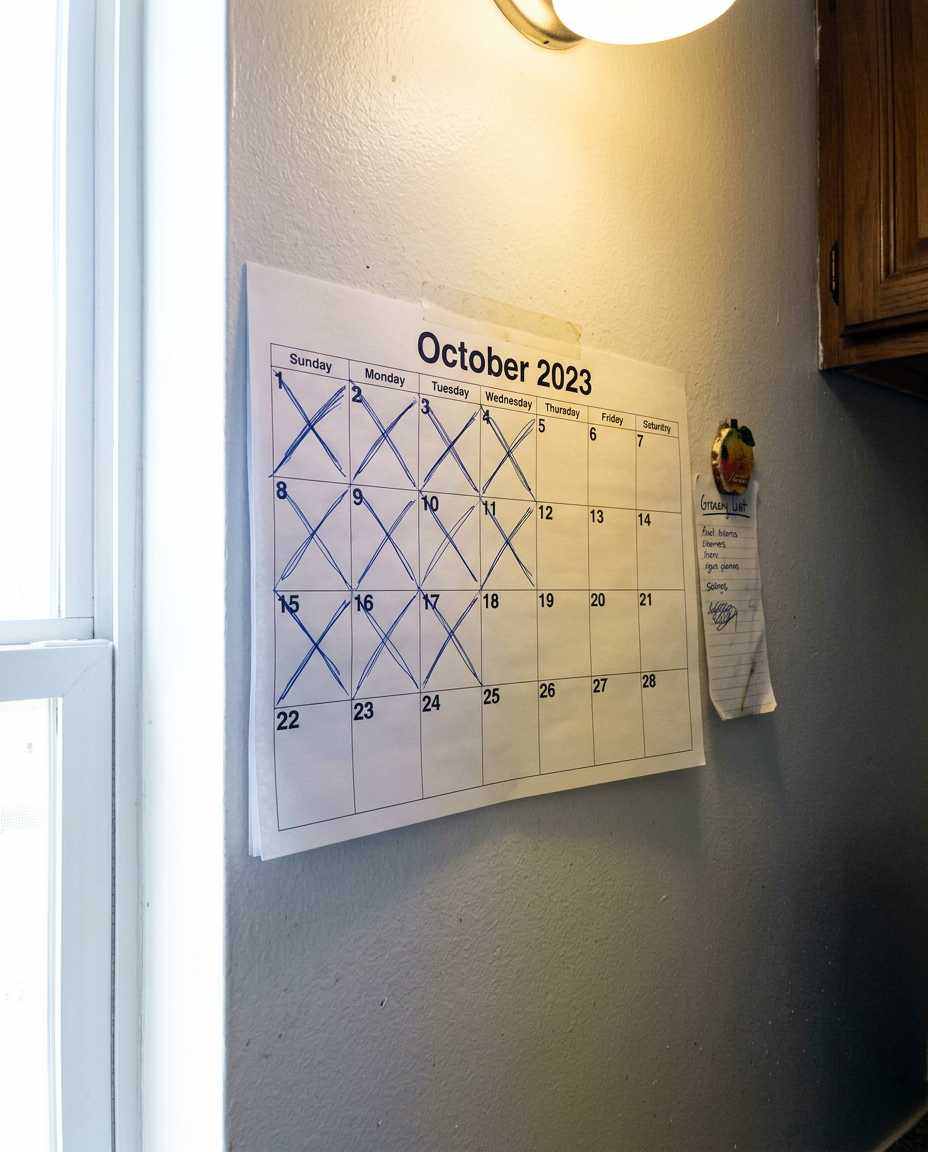
You did it twenty-one days in a row. You have the marks on the calendar to prove it, and this morning you woke up on day twenty-two and the thing cost exactly what it cost on day four.
Here's the part I want to get to, because it's the part I got wrong too. You didn't conclude the number was wrong. You concluded you were.
Twenty-one days is not a finding. It's a sentence from a book about plastic surgery.
What You've Been Told
Twenty-one days to build a habit. It's on mugs. It's the length of about half the challenges on the internet, and it's why there's a little flame next to your streak.
I'm not going to be sarcastic about it. I believed it, on an index card, in year one. It turned a formless project — become a person who does things — into a number I could count down from. That's a real service.
It's just not a real number.
Where It Actually Came From
Maxwell Maltz was a plastic surgeon. In 1960 he wrote a book called Psycho-Cybernetics, and in the preface he wrote that it "usually requires a minimum of about 21 days to effect any perceptible change in a mental image."
He was describing his own patients: how long it took someone to stop flinching at their new face in the mirror. He noted phantom limb sensations hanging around about the same three weeks.
That's a surgeon writing down what he saw in his own waiting room. No control group, because no study — nobody was measuring habits, because habits weren't the subject. Somewhere between 1960 and your phone, how long until you stop flinching at your own reflection became how long until brushing at night runs itself.
What The Paper Actually Says
There is real research on this, and it's smaller than the headline.
Lally, van Jaarsveld, Potts and Wardle published it in 2010 in the European Journal of Social Psychology. Ninety-six volunteers each picked one daily behaviour — something to eat, drink, or do — hooked it to a cue they already had ("after breakfast"), and were asked to keep it up for twelve weeks, rating every night how automatic it felt.
The size of it
- 96 people started. 82 produced usable data.
- A curve could be modelled for 62 of them. Only 39 of those fit it well.
- Among that group, the median time to reach 95% of their own plateau was 66 days.
- The spread ran from 18 days to 254 days.
- The study ran 84 days. Nobody watched 254 happen — that end is a projection off a curve, not an observation.
- They were asked to file a rating every night. The median person filed 47 of the 84.
Nobody was randomised to anything here either. It's 82 people rating themselves on the nights they remembered, with a line drawn through the dots — the best thing we have, and still only that. Read it yourself.
Don't Do What I Did With It
When I first read that, I did the stupidest available thing. I got a new index card and wrote 66.
Sixty-six is not the replacement for twenty-one. It's the middle of a subgroup of a subgroup, in one study, of eighty-two people.
Then somebody gathered everything up. A 2024 review in Healthcare went through 20 studies and 2,601 people. Read the fine print and only four of those studies had actually clocked how long it took. Those four: medians between 59 and 66 days, means between 106 and 154, individual times from 4 days to 335.
The gap is the finding: the medians and the means don't agree, which happens when a few people take extraordinarily long and drag the average up. There is no single number to hand you, and that's not a hole in the research — that is the research.
So Is It Useless?
Almost nothing is. Here's what survives once you take the number out.
What holds up
It's a curve, not a switch. Automaticity climbs steeply, then flattens. Nothing flips on a Tuesday. If you're waiting for the morning it suddenly feels different, you're waiting for an event the data says doesn't happen.
Missing one day did not wreck it. Lally's group counted 140 missed days across 55 people and measured what happened next: automaticity dropped an average of 0.29 points on a 42-point scale, then climbed again at about the rate it climbs anyway. The streak is a motivational device, not the mechanism. One missed Thursday resetting you to zero is a rule you invented.
The spread is the mercy. If it still costs you on day 40, you're inside the ordinary range of the people it worked for. That's the whole reason I wanted this one written down.
What I'd Still Do
- Hook it to something that already happens. "After I put the kettle on," not "at 7 a.m." The cue does more work than the calendar.
- Make it small enough to be boring. Boring survives a bad week. Ambitious doesn't.
- Count days done, not days in a row. Twenty out of thirty is a habit forming. Your app will call that a failure. Your app is wrong.
- Set the check-in at two months, not three weeks. A check-in, not a finish line.
- On day 22, ask the better question. Not is this automatic yet — ask is this easier than day four. Automatic is a place you arrive without noticing, which is why you can't stand at the door waiting for it.
I got sober four years ago and rebuilt a routine out of whatever I had left, and not one piece of it went automatic on a schedule I could have predicted. It worked for me. I'm one person, and one is not a study.
Not for
This is about ordinary habits — water, walking, going to bed, the small stuff you're adding. It's not about quitting something that has you by the throat: different shape, wrong size of help. If the thing you're trying to do daily is stop, that's a conversation with a doctor or a counsellor, not a number on a card.
One Thing, Today
Go find where you wrote the number. The app, the card on the fridge, the note in your phone with the little checkboxes.
Cross the number out. Write the date you started instead.
A date can't fail you on day twenty-two. It just sits there getting longer.
More from Wilder Brain
Nobody Claps For This Part
Eight weeks in, doing everything right, and nothing feels like anything. What two large trials actually measured about acting first and wanting it later.

Task Aversiveness, In Bar Language
The real predictor of procrastination has a clinical name and nothing to do with being lazy. Here is the number behind the word, and the one thing that actually moves it.
Cortisol, In Bar Language
Everyone online is selling a way to lower it. Here's what it actually is, why yours is supposed to spike at dawn, and the short list of things that really move it.